Wednesday, November 26, 2008

East Cluster Meeting Minutes, November 26, 2008

Again, a fantastic gathering even despite vacation absences.

Flow
  • Overall, things continue to feel smooth. No major challenges to effective flow through the day.
  • We discussed what the new centralized appointing system means to our workflow. Mark and Becky explained well what the patient experience will be when they call in.
  • We took advantage of Mark's presence to discuss the challenges of helping patients get from the front door to their provider. There are survey requirements of the front desk admin staff, especially for patients with various kinds of payors. This can create a backup in the check in line, unwanted by everyone. What to do about this? There is an effort to make sure there is flexible staffing available to meet demand, and there is a remodel of the check-in area in the design stage. This is a lean opportunity, if ever there was one!

Quality

  • New Dashboard numbers are out. We reviewed these together and note that there is not yet an association between the current data and our recent efforts. We'll need a three month lead to see what effect our outreach is having on HEDIS data.
  • We broadened our discussion about quality today, talking about how to include patient experience in our quality work. We have agreed already to include a guiding statement at the top of our standard workflow document, indicating that each of our patients should answer with an enthusiastic "Yes!" to the following:

I have one person I think of as my personal doctor or nurse

It is very easy for me to get medical care when I need it

Most of the time, when I visit my doctor’s office, it is well-organized,
efficient, and does not waste my time

The information given to me about health problems is very good

I am confident that I can manage and control most of my health problems

I feel able to give meaningful feedback to my doctor’s office about ways
things could be improved

  • It is not yet clear how we should measure this. There exists already a strong effort by GHC to evaluate patient satisfaction, but the quesitons are not precisely the same. More to come on this in future meetings.

THE GREAT North Cluster Meeting

Meeting notes from November 24, 2008

1) follow up from last week
  • printer location feedback:will try and move where scale is and see if more practical.
  • fluoride smart sets use, we are doing better
  • AVS use, doing great!
  • same day HEDIS screening, providers find very helpful Flow staff have been GREAT! Its up to providers to act on HEDIS(lets go providers!)
  • off loading nurses, continue to group result notes and use My group health as much as possible
  • flow sheets for MA's, no changes flow staff feel they are accurate
2) New items
  • standardize pediatric resources available to patients. Basically, teens have a teen book and Well child handouts in Peds drawer

4) Core/cluster communications
  • providers remember to send patients out with yellow sheet and consent form for immunizations so core staff know they are coming from clinic and not as ' walk in'
  • we need to work hard with core to make sure we check in with them on their availability and respect their time constraints and vice versa. We will continue to work on respect/support of one another as we are all working very hard!
  • ear irrigation, try to have patients schedule with core if at all possible
  • ted hose, have MA or pharmacy measure when appropriate and avoid sending to core if they don't need AAI, if they need AAI, have patient set up appt.
  • basically try to off load core when we can and avoid walk-in appt's when at all possible so they can plan their day accordingly

Wednesday, November 19, 2008

How do you say your name?

This suggestion sent in by Errick:

Clinical Staff should consider opening and editing in Family Comments
section of EPIC SNAPSHOT to input (or review) phonetic breakdown for unusual
pronunciations of names.

In the spirit of "…continue to do better for our patients…", we have
all had that moment of "wondering how to pronounce the name" or worse, being
instructed (again) "how to pronounce the name" by the patient.

My thrust is not to MAKE work, but to connect better with our
patients.

Thanks Errick for the great idea. I have followed Dr. Levine's practice of including "goes by" and pronounciation in the social history section of the member's chart. I can drop this into a note by typing ".socdoc" in a text field. We don't have a standard practice across the clinic, but perhaps we should.

Further comment from Dr. Levine:

"Having a reminder for how to pronounce a name matters. As Dr. Chapman said, if we put this in social documentation we can retrieve it with dot phrase, whereas there is no dot phrase available to retrieve data from the Family section in the snapshot."


And from the West Cluster:

"The West cluster talked about this at a cluster meeting and arrived at the family comments section of snap shot as our general preference, FYI."

MyEpic Teaching Links

Sarah Philp asked if I would post some of the teaching pictures I use as visual aids in clinical visits. I have a handful that I use a lot to support concepts or practices that are hard to explain. I've included these below.

I also use the MyEpic links to get me quickly to references I use during visits: BMJ clinical evidence, cardiac risk calculator, the GHC formulary, and FirstConsult.

Here are my teaching images:

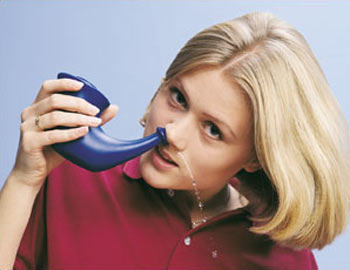
Neti Pot. I'm a neti pot zealot, and recommend these sinus rinses to almost everyone with a nose. It is easier to show people pictures--first of the sinuses, then of someone using a neti pot--than to try to explain it. There are lots of pictures online, and some interesting YouTube neti pot videos, but I use this image: http://paxarcana.files.wordpress.com/2008/01/neti_pot.jpg

Sinuses. This is a nice lateral view of the sinuses, which I use mostly as supporting photo for the inevitable neti pot recommendation. http://www.sinusinfocenter.com/images/SinusPollenLarge.jpg

Eustachian tubes. I use this to help teach about ear pain, and dizziness. It is animated, but not helpfully so.
http://www.dizziness-and-balance.com/anatomy/images/Middle-Ear-Pressure.gif

Male GU. Helpful in explaining the prostate and why BPH does what it does. http://www.rush.edu/rumc/images/ei_0327.gif

Diet plate. I'm not sure how I really feel about this one. I was looking for a simple kind of diagram to drive home the concept "eat mostly plants" for thos who ask questions about dieting. My hope is to simplify the complicated mess that complicated diet books push on people. This image doesn't quite do what I want, it's too busy, but it is a reasonable teaching tool. http://www.food.gov.uk/images/pagefurniture/eatwellplatelarge.jpg.

I add and remove images regularly, depending on what kinds of things I think I want visual aids to teach. I use Google Images for searches.

East Cluster Meeting Minutes, November 19, 2008

The East Cluster had another great meeting today. Here's the summary.

Flowstaff Support (standing agenda item)

Things have been running smoothly this past week. The level of organization that comes from our daily communications (in huddles) and in weekly meetings has improved flow overall.

We discussed making a focused effort to get our members signed up for MyGroupHealth, with the goal of improving communication with our patients by giving them access to their primary care provider through e-mail, access to their clinical results, and reducing the number of phone calls made by providers and nursing staff to discuss results. It was noted that with the advent of Medical Home in 2009, there will be renewed efforts around participation in MyGroupHealth.

...but we're starting now.

We agreed to use existing handouts to educate our members and encouraged them to sign up for MyGroupHealth. We will also write a quick dot phrase for after visit summaries and post it to this blog.

Pursuing Quality (standing agenda item)

First this: Burien's AVS rate is 98%!!! Great job everybody! We're this close to 100%.

In the past week, we have standardized several tools discussed in our previous meeting. These include copying PCPs on HEDIS outreach calls, scanning daily schedules for patients with HEDIS needs, discussing these in huddles, and "green dotting" those patients. This has worked very well for everyone.

Ongoing outreach efforts have uncovered some complex situations, including members who have met their HEDIS measures already, and patients who can't (due to allergies, for example). We have a line of communication open to correct the list so our quality scores reflect the health efforts we and our patients are making.

The data we get do have a lag of about two months: we should start seeing the results in our quality measures soon.

Great work! We'll meet again next Wednesday, November 26 at 8:15a.

Wednesday, November 12, 2008

Katie's HEDIS telephone encounter dot phrase

Thanks, Katie! This will be useful to anyone doing outreach calls to patients in need of visits, labs, and screenings.

Patient has not met the Hedis Measurements for the following criterias:

Diabetes/Heart/Others:
-A1C
-LDL
-Retinal Screening
-Ace/Statin/Antiplatelet
-*** Ca Screening
-*** Ca Screening
-*** Ca Screening
-***

Last OV was *** with *** for ***

Comment/Plan: ***

Dragon

On Monday morning at dawn I drove to Tacoma to learn to use Dragon, our voice recognition software. That brief experience was transformational and how I think about using technology in my daily practice. It is clear that one can perform every imaginable computer operation without the use of one hands. I don't think however become that skilled, but I certainly can use voice recognition to do my daily work better and faster.

I type pretty quickly, but my keyboard rate simply doesn't compare to the roughly 120 words/min I can accomplish with voice recognition.

One of the things I learned today in a one-on-one training session with Ed Rosenthal is that we can share voice commands -- basically verbal dot phrases -- the same way we share keyboard dot phrases. These voice commands are saved as a series of files into shared location that anyone who uses voice recognition software at Burien can access.

An example: The neti pot phrase I recently shared on this blog can be packaged into a voice command, something like "dot neti pot" that would then spit out an extended list of neti pot instructions. If you wanted to use this phrase in Dragon, you would simply import it into your own Dragon profile from the shared drive.

Another example: Dragon can be taught to recognize, and spell correctly, complex and commonly used names. This morning, I taught Dragon to recognize one of our orthopedics specialists with a difficult to spell name. Doing this will ultimately save me time in my documentation.

I just begun to learn all of the things that voice recognition software can do. Very exciting!

The only challenge I have really encountered thus far is the software's tendency to misrecognize some common nonmedical language. So please excuse me if there is anything above that doesn't make sense--I'm voice-blogging this entry...Dragon blogging...dragogging?

My new mantra: speak, don't type.

East Cluster Team Meeting Minutes

East Cluster Team Meeting Minutes
November 12, 2008
Attending: Butler, Chapman, Dolan, Meier, Rogers, Teurn

Another outstanding meeting!

Flow-staff support:

Check in about flow (standing agenda item):
  • Overall, flow appears to be going very well!
  • There are occasionally back ups in the vitals room, mild.
  • Becky has ordered a new auto blood pressure system, not sure when it will arrive
From the suggestion box:

  • If patient refusing medication, should it be discontinued? Yes
  • Should vitamins, herbs, supplements all be documented in the med list? Yes, but if the medication does not seem straightforward to enter, it is fine to have the provider do this.
  • Patients should take their things with them when going to lab/CORE/xray if returning to cluster afterward; this frees up the room for better flow. There was no disagreement about this, though it is not always clear which room they should return.

Pursuing Quality

Review of recent successes and challenges:

  • The alphabetized list!! This is a fantastic innovation by Barb to capture patients on the HEDIS list. Barb scans the alphabetized list daily to find patients who are coming in for a visit that day. This ensures that we maximize the value of every patient contact.

We discussed ways to standardize the flow of quality work that are nursing staff is doing around HEDIS measures. A good standard flow would go as follows:

  • Telephone encounters should include HEDIS in the title
  • Use Katie’s dot phrase to list all current HEDIS deficiencies in the telephone encounter
  • Route the telephone encounter to the PCP
  • Leave the telephone encounter or open if you are unable to contact the patient, make only two attempts to contact the patient by telephone, and send a letter enclosed telephone encounter

Our new quality numbers are posted on the East cluster bulletin board:

  • AVS is 98% for the cluster!
  • first call resolution continues to be successful
  • we are making progress on her HEDIS measures